
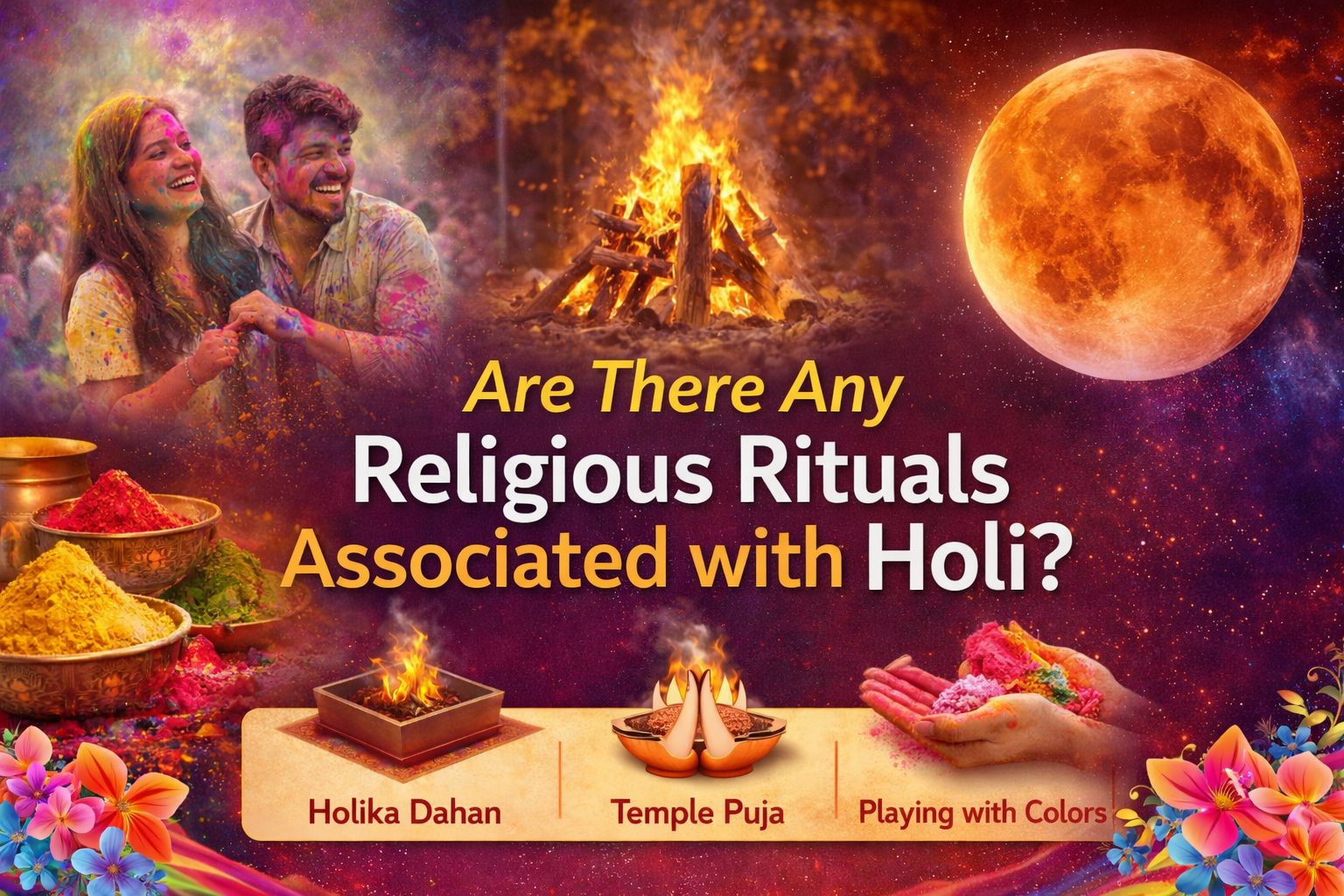
Many people ask, are there any religious rituals associated with Holi, or is it only a festival of colors? The answer is clear. Holi carries strong spiritual and cultural meaning in Hindu tradition. While people enjoy gulal, sweets, and gatherings, the festival begins with sacred customs and symbolic practices.
Across India, families follow rituals before and during Holi. These traditions may vary by region, but the spiritual message remains the same. Holi celebrates faith, truth, renewal, and the victory of good over evil.
This guide explains the religious side of Holi in simple and practical language.
1. Holika Dahan: The Core Ritual of Holi
When discussing are there any religious rituals associated with Holi, Holika Dahan stands at the center.
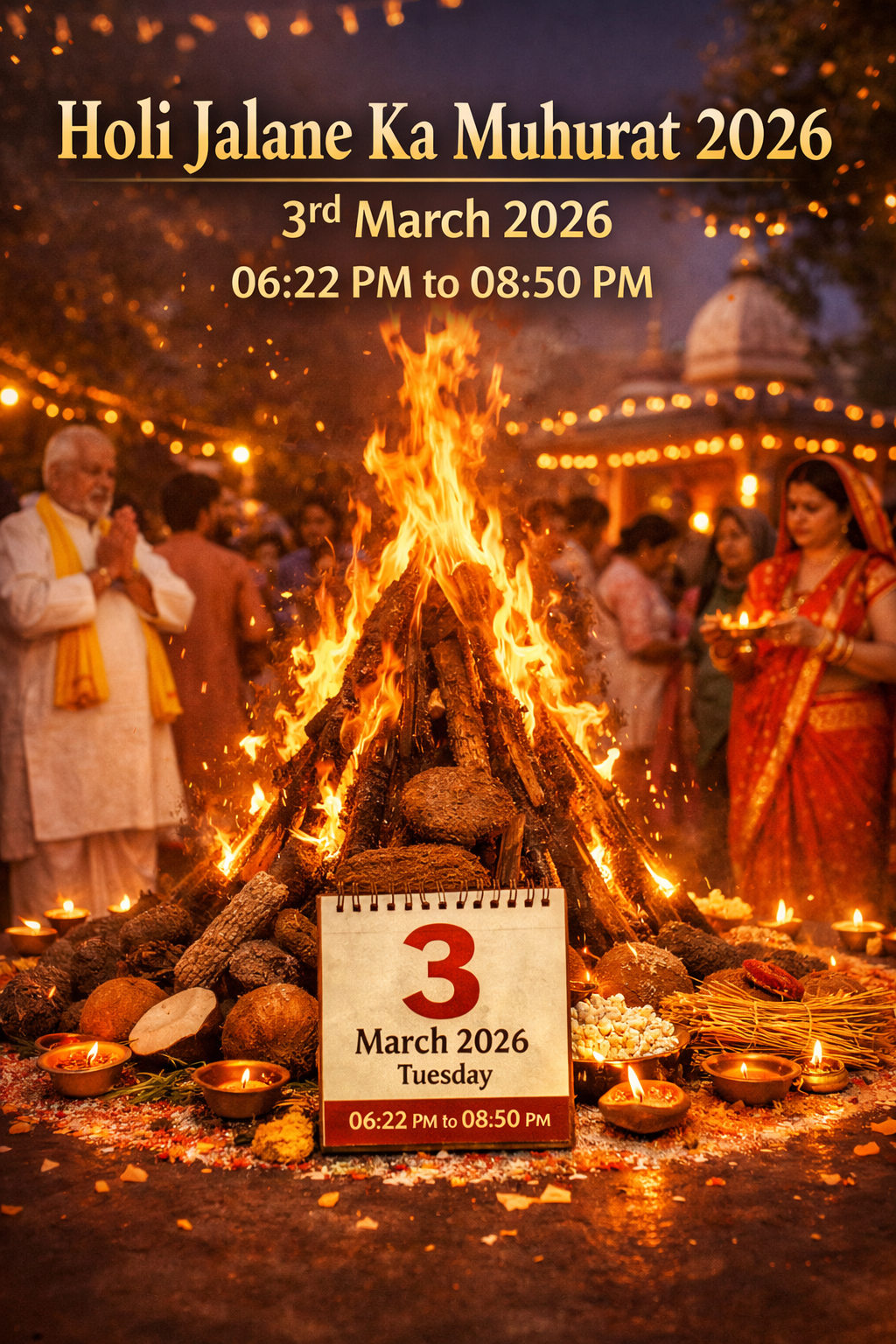
People perform Holika Dahan one evening before the main day of playing with colors. Many call this day Choti Holi. Families gather in open spaces and light a sacred bonfire.
This ritual connects to the story of Prahlad and Holika. Prahlad remained devoted to Lord Vishnu despite facing opposition. Holika attempted to harm him by setting him on fire, but she failed. Prahlad survived due to his faith.
The ritual symbolizes the triumph of devotion and truth over arrogance and evil.
During Holika Dahan, families:
- Offer coconut, grains, and wood to the fire
- Walk around the bonfire as a mark of respect
- Pray for protection and well-being
- Apply sacred ash on the forehead
Many households also check the correct muhurat before performing this ritual to ensure proper timing.
2. Worship of Lord Vishnu and Lord Krishna
If you wonder, are there any religious rituals associated with Holi beyond the bonfire, the answer is yes.
Holi holds strong links to Lord Vishnu and Lord Krishna. Many families perform a small puja at home. They clean the prayer area. They light a diya. They offer flowers and sweets.
In places like Mathura and Vrindavan, Holi celebrates the divine bond of Radha and Krishna. Temples organize special prayers, devotional singing, and aarti. Devotees apply gulal to the idols before beginning celebrations.
This practice reminds people that every celebration begins with gratitude and blessings.
3. Fasting and Spiritual Reflection
Some families observe a fast on the day of Holika Dahan. They break the fast after completing the evening ritual.
Fasting promotes discipline and mindfulness. It helps people focus on prayer and reflection.
Not all households follow this custom. However, it remains common among traditional families who want to observe Holi in a spiritually mindful way.
4. Offering of New Harvest
Holi marks the arrival of spring and the harvest season in many parts of India. Farmers often offer new wheat ears or grains into the Holika fire.
This act shows gratitude for agricultural abundance. After roasting the grains, families share them as prasad.
This tradition highlights the connection between faith, nature, and prosperity.
5. Playing with Colors as a Symbol of Unity
People often focus on the fun side of Holi. Yet, even the act of applying colors carries meaning.
When people ask, are there any religious rituals associated with Holi that involve colors, the symbolic answer is yes.
Colors represent equality and togetherness. When people apply gulal to each other, they forget social differences. They resolve past misunderstandings. They welcome new beginnings.
Spiritually, colors reflect joy, renewal, and positive energy.
Choosing safe and natural colors also reflects responsibility toward health and the environment.
6. Temple Visits on Holi Morning
In many regions, families begin Holi morning with a temple visit. They seek blessings before meeting friends and relatives.
Temples conduct special rituals. Priests decorate deities with flowers and gulal. Devotees sing bhajans and offer sweets.
This practice strengthens spiritual connection and reminds families of the deeper purpose behind the celebration.
7. Charity and Acts of Kindness
Holi also promotes compassion and generosity.
Some families donate food, clothes, or sweets to people in need. This act reflects dharma and community spirit.
Religious rituals associated with Holi are not limited to fire rituals or prayers. Acts of kindness also carry spiritual value.
Sharing happiness strengthens bonds within society.
8. Regional Traditions and Variations
India celebrates Holi in diverse ways.
- West Bengal observes Dol Jatra with devotional processions.
- Punjab celebrates Hola Mohalla with martial traditions.
- Maharashtra celebrates Rang Panchami after the main festival.
These variations show cultural diversity while preserving religious roots.
Holi in Modern Times
Today, families balance tradition with practical life. Some follow every ritual strictly. Others keep celebrations simple.
When people search online are there any religious rituals associated with Holi, they often seek clarity. The key idea remains awareness. Rituals encourage positive thinking, gratitude, and unity.
Holi teaches people to let go of negativity and welcome renewal.
ShaktiRang and Responsible Celebrations
At ShaktiRang, we believe Holi is both spiritual and joyful. It is not only about colors. It is about culture, safety, and community.
Through our previous blogs, we have shared:
- Proper muhurat guidance
- Grahan updates
- Safe Gulal Buying Tips
- Ritual explanations for families
We encourage mindful celebration. Choose natural colors. Respect traditions. Protect nature.
Understanding whether there are any religious rituals associated with Holi helps families celebrate with clarity and confidence.
Final Thoughts
So, are there any religious rituals associated with Holi? Yes, there are many.
Holika Dahan remains the main ritual. Worship, fasting, harvest offerings, temple visits, and charity also hold importance.
Holi blends devotion with celebration. It teaches faith, forgiveness, and unity.
You may follow every ritual or keep it simple. What matters most is intention.
Celebrate with awareness. Celebrate with positivity. Celebrate with ShaktiRang. 🌸